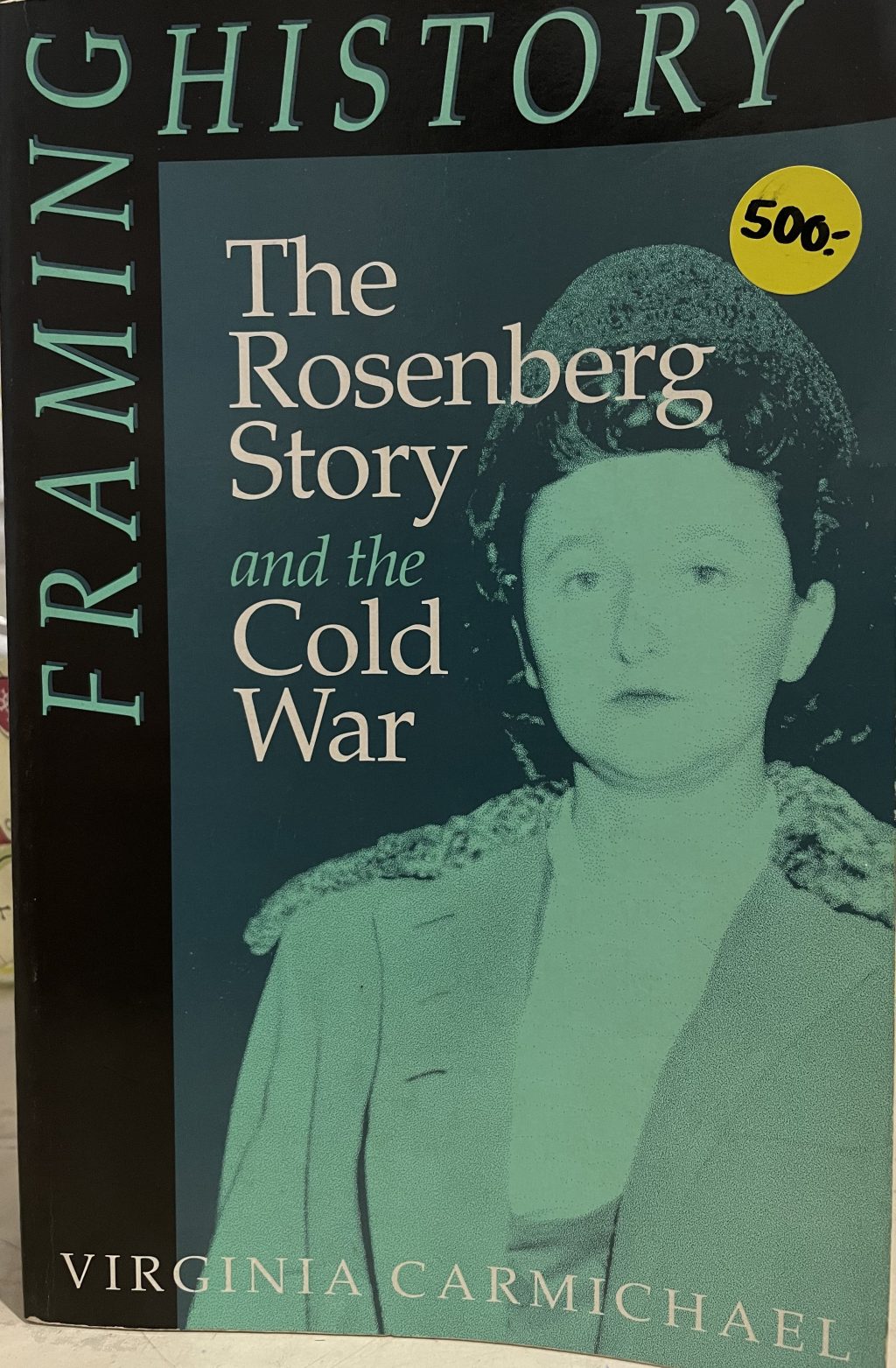
by Virginia Carmichael
In 1953 Julius and Ethel Rosenberg were convicted of conspiracy to commit espionage and executed for treason. Their story, says Carmichael, profoundly shaped and influenced the cold war era. As it evolved, the official Rosenberg story contributed to the splitting of the postwar domestic left, the increasingly polarized anticommunist sentiment, and the establishment of the national security state. Subsequently, it had a crucial effect on governmental control and American postwar domestic and foreign policy.
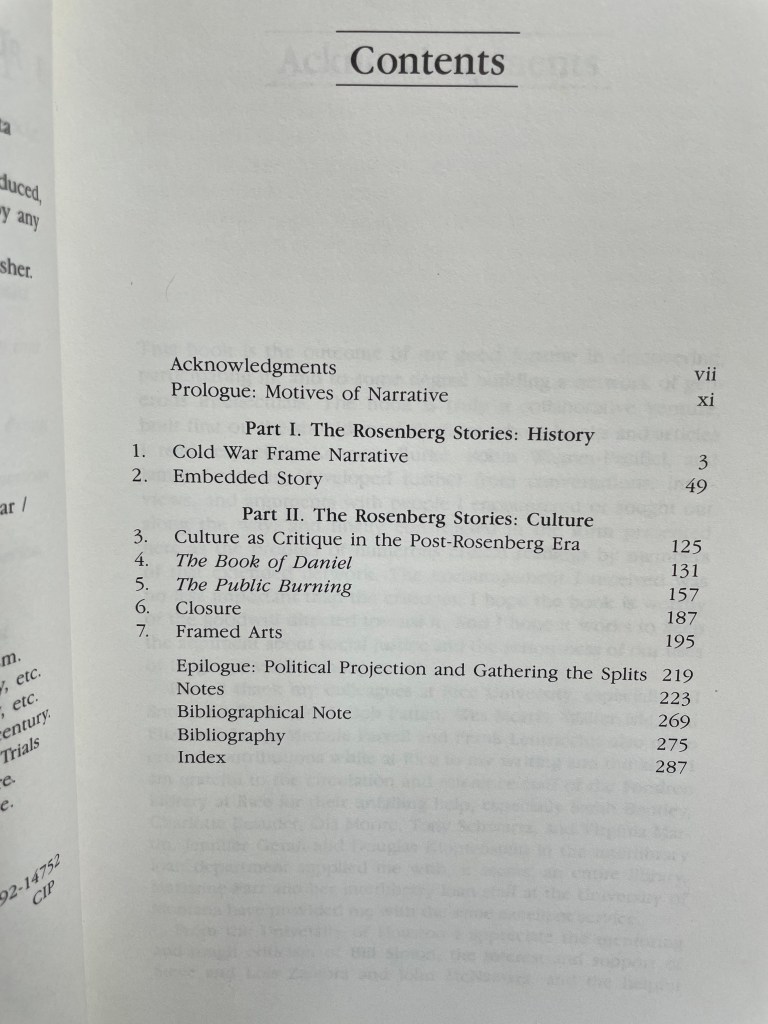
In Framing History, Virginia Carmichael offers a provocative new interpretation of the Rosenberg story. Carmichael argues that this social drama produced many stories serving multiple interests and functions, many of which confront the politics of both writing and reading. Ultimately, Carmichael demonstrates that this story’s resistance to closure–manifest in its repeated tellings in historiography, biography, literature, and the visual and performing arts–suggests its lasting cultural impact on a nation coming to terms with the end of the cold war era.
ABOUT THE AUTHOR:
Virginia Carmichael received a doctorate from Rice University and has lectured extensively in the areas of twentieth-century American political society, the cold war, and cultural criticism. She is currently a freelance writer living in Missoula, Montana.
Status: Available, In Stock
Price: PHP500.00
ISBN (Paperback): 0816620423
Type: Paperback
Author: Virginia Carmichael
Genre: History
No. Of Pages: 299